


International Athletes Are Exposing College Sports’ Systemic Crisis
- Timothy F. Bryson

- Jan 6
- 10 min read
As a researcher and consultant specializing in internationalization and sport, I've watched this crisis unfold for years.
What's happening with the transfer portal and mid-season international signings isn't surprising…
It was inevitable.
Why?
Because the NCAA is facing a reckoning.
Yes, there are rule-breakers and bad actors.
But this is about a fundamental incompatibility between American collegiate sports' 20th-century amateur model and 21st-century global athletic development. Two separate but simultaneous phenomena are making this impossible to ignore: the chaos of the Division I football transfer portal and the controversy over mid-season international athlete signings.
They're not connected, but they're both symptoms of the same underlying mismatch.
Let's walk.
The Transfer Portal Window: Different Stakes for International Athletes
Right now, as you read this, the Division I football transfer portal is open. From January 2-16, FBS and FCS programs are navigating what has become an annual roster reconstruction period. On the first day alone this year, more than 4,000 Division I football players entered the portal.
That’s not a typo.

For American athletes, the process is pretty straightforward: enter the portal, connect with interested programs, choose a school, enroll.
For international athletes on F-1 visas, it's exponentially more complex and the stakes are dramatically higher.
International athletes must navigate federal immigration compliance alongside athletic recruitment. They need to communicate with their current Designated School Official (DSO), obtain a new Form I-20 for their new institution, maintain their visa status throughout the transition, and ensure all paperwork is properly filed with USCIS.
All within 15 days of the program start date listed on their new Form I-20.
Miss a deadline, fail to maintain proper enrollment status, or make an error in the transfer process, and the consequences aren't just athletic ineligibility.
It’s deportation.
In today's immigration climate, this isn’t hyperbole.
International athletes face the very real threat of being removed from the country if they don't perfectly navigate requirements that American athletes don’t have to think about.
The transfer portal creates stress for everyone.
But for international athletes, it’s about navigating athletic recruitment while also maintaining your legal right to remain in the United States as an international student.
Mid-Season International Signings: A Separate But Related Crisis
While the transfer portal dominates headlines in football, a completely separate controversy has erupted in basketball.
On Christmas Eve, Baylor announced they'd signed James Nnaji, a 7-foot center from Nigeria who was the 31st pick in the 2023 NBA Draft and had been playing professionally in Europe. He was granted immediate eligibility with four years of college eligibility remaining. Nnaji's addition brings Baylor's roster to six international athletes.
The backlash was immediate and fierce. Michigan State's Tom Izzo called it "ridiculous" and said "shame on the NCAA." Arkansas coach John Calipari argued that anyone who stays in the NBA draft shouldn't be eligible for college basketball. Other programs had already signed players with G League or international professional experience earlier in the season.
It's not just men's basketball.
Texas Tech women's basketball signed Stephanie Okechukwu, a Nigerian athlete who is the tallest woman in women's college basketball history. She now makes five international athletes on the Texas Tech roster.
"Just a couple of years ago our program took a deep dive into the international recruiting space. The international game has grown exponentially, which now provides prospects globally for us to recruit, and clearly with our current roster, it has already paid off. The relationships built over the last two years gave us an opportunity to recruit and eventually sign Stephanie."
These aren't one-off signings exploiting loopholes.
Both Baylor and Texas Tech have made sustained commitments to international recruitment, building rosters with five to six international athletes each. DeRoo's quote perfectly captures what's happening across college sports: coaches are strategically investing in international recruitment because the talent pool has expanded globally.
This is adaptation to reality, not opportunism.
“When it first came out with G League players, I wasn’t in favor of that either. But again, we don't make the rules and as we find out about things, we're always going to adapt to put our program in the best position to be successful.”
Recently, NCAA President Charlie Baker issued a clarifying statement: the NCAA will not grant eligibility to anyone who has signed an NBA contract, including two-way contracts. But he also noted that rules have long permitted schools to enroll players with international league experience mid-year, and the NCAA is trying to ensure international players aren't disadvantaged compared to American athletes.
That last part is crucial.
Baker's statement reveals the core problem: the NCAA is trying to apply American amateur standards to a global sports economy that doesn't operate on those principles.

The Root Cause: Global Sport Migration Doesn't Follow NCAA Rules
Here's what's really happening. Football and basketball have become truly global sports.
Elite talent develops worldwide, and professional pathways look fundamentally different outside the United States.
International athletes have always been part of college sport. But now they're increasingly visible in revenue-generating sports, and that visibility has magnified systemic issues that were easier to ignore when they affected lower-profile programs. When a football program signs an international transfer or a basketball team adds a former professional mid-season, the stakes are higher, the scrutiny is intense, and the questions about fairness become unavoidable.
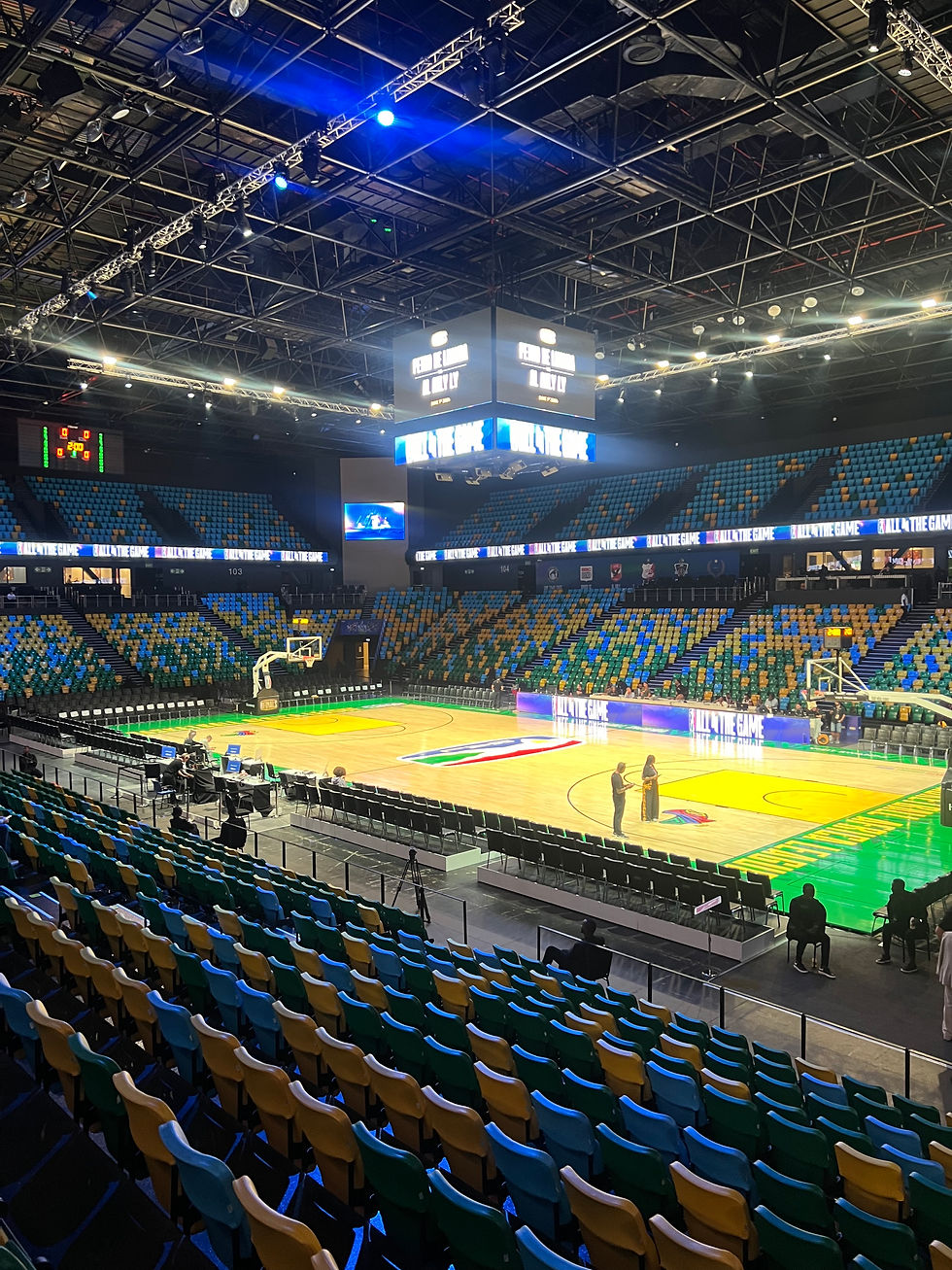
A 17-year-old in Spain might sign with FC Barcelona's youth academy to receive professional training, compensation, and competing against adults. A Serbian basketball player develops through EuroLeague programs. An African athlete plays in the Basketball Africa League (BAL) through the BAL Elevate program.
This is the norm.
Meanwhile, American prospects follow the NCAA's amateur model: AAU circuits, high school leagues, and until recently, no compensation.
Today, American athletes can receive revenue share payments directly from institutions and earn money through NIL deals.
Coaches are using NIL as a recruiting tool, including to attract international athletes out of professional and semi-professional systems abroad.
At the same time, U.S. immigration law makes it legally unclear (or in some cases impossible) for international athletes on F-1 visas to fully access NIL or revenue-sharing opportunities.
The result is a system where the NCAA benefits from global labor recruitment and NIL-driven competition, while international athletes absorb the legal, financial, and immigration risk created by that ambiguity.
These systems worked fine when they operated in parallel.
American colleges recruited American high schoolers.
International pros stayed international.
But that separation no longer exists.
Under immense pressure to win, coaches have discovered a new talent pool: international athletes with professional experience who want American exposure, education, or an alternative path to elite leagues. The NCAA's eligibility framework, built for American high school graduates moving linearly to college, simply wasn't designed for a 20-year-old who's been a professional in Europe deciding to enroll at an American higher education institution.
Charlie Baker and the NCAA may be attempting to level the playing field. But as long as immigration policy remains misaligned with college sport’s new economic reality, those efforts will continue to produce unequal outcomes.
The fundamental issue isn’t intent. It’s structure.
The NCAA’s current framework can’t keep pace.

This Is a Systemic Problem Requiring Collective Solutions
The transfer portal and mid-season international signings are separate issues.
One is about athlete mobility within American college sports while the latter is about eligibility rules for athletes with professional international experience.
Together, they're revealing the same fundamental crack in the NCAA’s foundation.
Here's what everyone needs to understand...
This is not the time for the blame game.
Nor is it a time to criticize individual international athletes who have made the decision to take their talents to NCAA programs and move their lives to the United States.
Because these issues were not created nor will be solved by individual programs, coaches, or even the NCAA acting alone.
This is a systemic problem that spans multiple domains including athletic governance, immigration policy, competitive equity, athlete welfare, and international sports development. A solution requires collective work from stakeholders across the entire ecosystem.
The NCAA (the governing body, not its membership institutions) receives a lot of criticism.
However, the NCAA was proactive and has recognized the growing global environment for at least two decades.
The NCAA’s International Outreach team has done phenomenal work educating prospective international athletes about the NCAA's ecosystem, helping international players understand eligibility rules, academic requirements, and the American collegiate model.
This was a proactive response to globalization and it worked well for years.
But the rate of international growth has outpaced these educational offerings.
The volume of international talent, the complexity of professional pathways, the addition of NIL and revenue sharing, the intersection with immigration law. They are all moving faster than the current infrastructure can handle.
Coaches are frustrated because they are navigating unclear rules.
Athletes are confused about what opportunities they have access to.
Programs are making decisions without clear guidance.
One concrete way to address current frustrations: significantly expand the NCAA's International Outreach program. More staff members, clearer guidance for coaches and compliance officers, unified communication about F-1 visa restrictions and compensation eligibility, faster responses to novel eligibility questions.

The Legal Risk Is Real
Beyond policy confusion, the NCAA faces serious legal exposure. The organization is already navigating massive litigation around athlete compensation, antitrust violations, and employment status. The international athlete issue adds another vulnerability to an already precarious legal position.
International athletes (and their representation) could sue for equal access to revenue sharing and NIL opportunities, arguing that F-1 visa restrictions create discriminatory treatment. Conversely, American athletes or programs could challenge that allowing athletes with professional experience violates competitive equity. Either way, the current ambiguity is legally untenable.
There's movement on the legislative front: the College Athletics Reform Act has proposed changes to the Immigration and Nationality Act that would address some of these visa restrictions. But legislation moves slowly and the NCAA can't wait for Congress to solve problems that are affecting competitions happening right now.
Some responses to international athlete participation have been troubling. States like Texas have banned international athletes from competing at the high school level, treating global talent as a problem to exclude rather than integrate.
This is not the solution. Not for high school sports and certainly not for college athletics.
Exclusion is a retreat from reality.
The solution isn't to ban international athletes.
It's time to redesign the system with international athletes in mind from the beginning. This means rethinking recruitment practices, rewriting eligibility rules that account for diverse professional pathways, creating clear guidance on compensation in light of visa restrictions, and building infrastructure that treats international participation as central rather than exceptional.

The Path Forward: Inclusive Redesign Through Community Work
The cause is that the NCAA is operating with rules designed for a closed American ecosystem in an era of global sport labor mobility.
Coaches aren't breaking the system – they're revealing that the system is already broken.
This requires more than NCAA policy changes.
This needs Congress to act on immigration reform. It needs athletic departments to invest in compliance infrastructure and DSO support specifically for international athletes navigating transfers.
This needs coaches to understand that recruiting an international transfer isn't just about athletic fit. It's about ensuring that athletes can legally remain in the country.
This needs international federations to coordinate with American collegiate sports.
This needs legal clarity on athlete compensation and visa compliance.
Everyone has a role to play.
Regardless of how international athletes arrive at their college or university, institutions have a responsibility to support them throughout their entire lifecycle in U.S. higher education. This requires dedicated resources that extend far beyond basic orientation sessions and tax education workshops. International athletes need ongoing support with visa compliance, cultural adjustment, academic integration, career development, and the unique challenges of navigating American collegiate sport while maintaining their immigration status.
The real questions facing college sports aren't about individual signings or portal windows.
They're existential.
Can the NCAA's concept of amateurism survive in a globalized sports economy where football and basketball recruit internationally at scale? Should American colleges continue pretending that revenue-sharing athletes from the U.S. and paid professionals from abroad can compete under the same system? How do you write fair eligibility rules when professional experience abroad is common and F-1 visa restrictions prevent international athletes from accessing the same compensation as Americans? How do you create competitive equity when immigration law intersects with athletic compensation?
These questions don't have simple answers and they certainly don't have answers that any single entity can implement alone.
What we need is a comprehensive, inclusive redesign of collegiate sport that accounts for international athletes at the core.
This includes recruitment practices, eligibility standards, compensation structures, immigration compliance, and support systems.
NCAA leadership expanding International Outreach resources and creating clearer, more responsive eligibility frameworks
Federal legislators addressing F-1 visa restrictions through proposals like the College Athletes Reform Act and simplifying transfer processes for international student-athletes
Athletic departments investing in compliance expertise, internationalized college athlete development curriculum and dedicated DSO support for athletes in the transfer portal, and international student-athlete services
Coaches and administrators understanding immigration requirements and participating in standards development rather than exploiting ambiguities
International sports federations coordinating pathways between professional leagues and American collegiate sports
Faculty and graduate students conducting research on internationalization and international athlete development to inform evidence-based policy
Legal experts providing clarity on compensation, employment status, visa compliance, and competitive equity
Until we acknowledge this is about incompatible systems colliding, we'll keep patching rules while the foundation and the building crumbles.
The football transfer portal window closes January 16th, while the basketball windows will open in late March. Other NCAA transfer windows are scattered throughout the year. But the systemic crisis these windows represent, alongside mid-season signing controversies and the unresolved status of international athlete compensation, demands more than temporary fixes. It demands that we come together to build something better.
Because community work is undefeated.
College sport internationalization is not going anywhere. The question is whether we'll respond with exclusion and finger-pointing, or with the collective work necessary to create a system that's fair, sustainable, and truly global.
It's happening. We walking.
TFB
Walk With TFB
Walk With TFB specializes in international athlete development and sport internationalization. We support international athletes throughout their journey, from recruitment through career readiness, and help institutions develop comprehensive strategies for global engagement. If your athletic department or organization is navigating the complexities of international recruitment, compliance, athlete support, or building global partnerships, we can help.
For more information, email Walk With TFB@gmail.com

Comments